
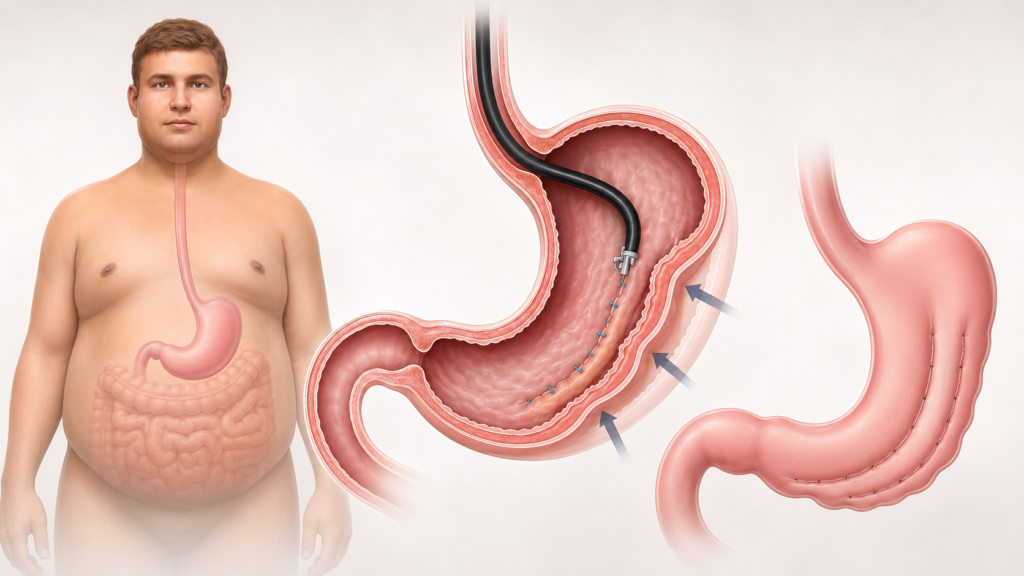
Endoscopic Sleeve Gastroplasty, commonly known as ESG, is a weight management procedure that helps reduce the size of the stomach without removing any part of it. Mistakes after ESG can quietly affect weight loss progress, especially when small habits slowly return after the procedure. Endoscopic Sleeve Gastroplasty, or ESG, can be a helpful tool for weight management, but long-term results still depend on the eating habits, lifestyle changes, and follow-up support after the procedure.
For suitable patients, ESG can be a helpful tool to support weight loss. However, like any weight management treatment, the procedure itself is only one part of the journey. What happens after ESG matters just as much.
Many patients do well in the beginning, especially when they are closely following the post-procedure plan. But over time, small habits can slowly return. Portions may increase. Fullness cues may be ignored. High-calorie soft foods may become frequent. Follow-up appointments may be skipped.
These small changes can affect results over time. This is why understanding the common mistakes after ESG is important for anyone who wants to maintain progress and support long-term weight control.
Why Habits After ESG Matter
ESG works by reducing the stomach’s volume through internal stitching. This helps patients feel full with smaller amounts of food. But the stomach is still a flexible organ. If it is repeatedly stretched by large portions or constant overeating, the effect of the procedure may gradually reduce.
This does not mean ESG has “failed.” It simply means the procedure needs to be supported by the right eating habits, lifestyle changes, and follow-up care.
The goal is not perfection. The goal is consistency. Patients who understand the key mistakes after ESG are often better prepared to protect their results and make adjustments early when needed.
Mistake 1: Going Back to Big Portions Too Soon
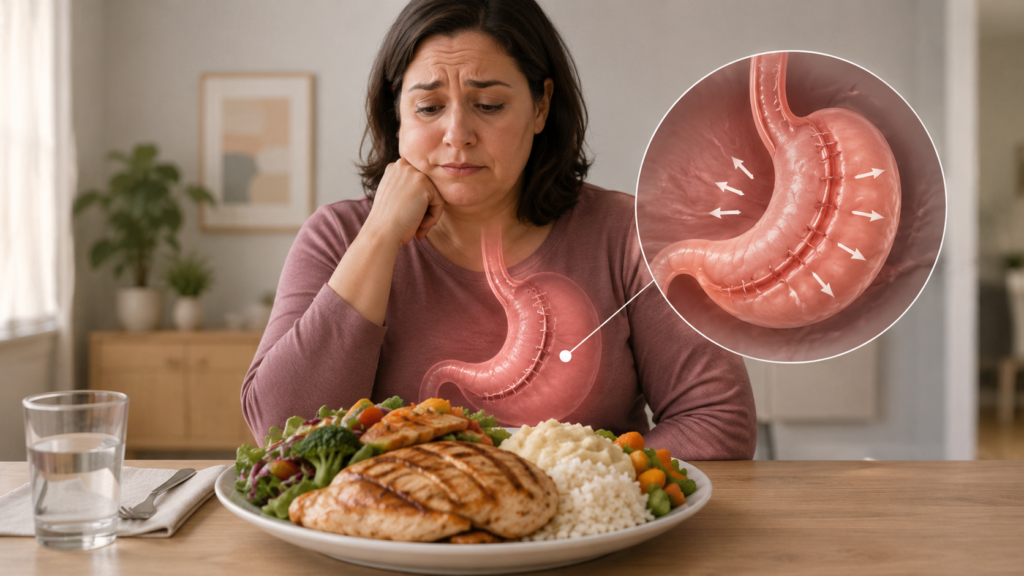
One of the most common mistakes after ESG is increasing portions too quickly.
After ESG, the stomach needs time to adjust to its new shape. Eating larger portions too early can place repeated pressure on the stitched stomach. Over time, this may cause the stomach to stretch, making it harder to feel full with smaller meals.
This is why patients are usually advised to follow a staged diet plan after ESG. The plan often starts with liquids, then slowly progresses to soft foods, and later to more regular textures, depending on the doctor’s and dietitian’s advice.
Practical advice:
Eat slowly. Use smaller plates or bowls. Stop when comfortably full, not when completely full. If portions are slowly increasing again, it may be time to review the eating plan with the healthcare team.
Mistake 2: Eating Until Very Full Every Time
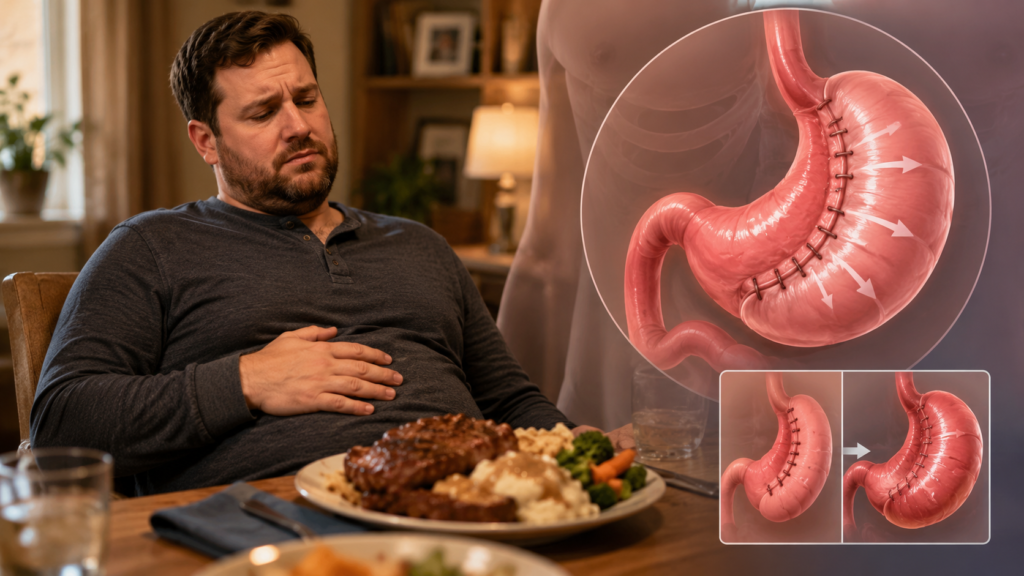
Another important mistake is regularly eating until maximum fullness.
Many people are used to stopping only when they feel very full. After ESG, this habit can work against the procedure. The aim is to recognise fullness earlier and stop at a comfortable point.
Eating until very full may repeatedly stretch the stomach. Over time, this may reduce the effectiveness of the stomach fold and affect weight loss progress.
This is one of the mistakes after ESG that can happen quietly because the change may be gradual. A patient may not notice it at first, but after a few months, they may realise they are able to eat much more than before.
Practical advice:
Pause halfway through meals. Eat without distractions when possible. Learn the difference between “satisfied,” “full,” and “overfull.” Stopping earlier is a skill that improves with practice.
Mistake 3: Relying on Soft, High-Calorie Foods
Soft foods are not always light foods.
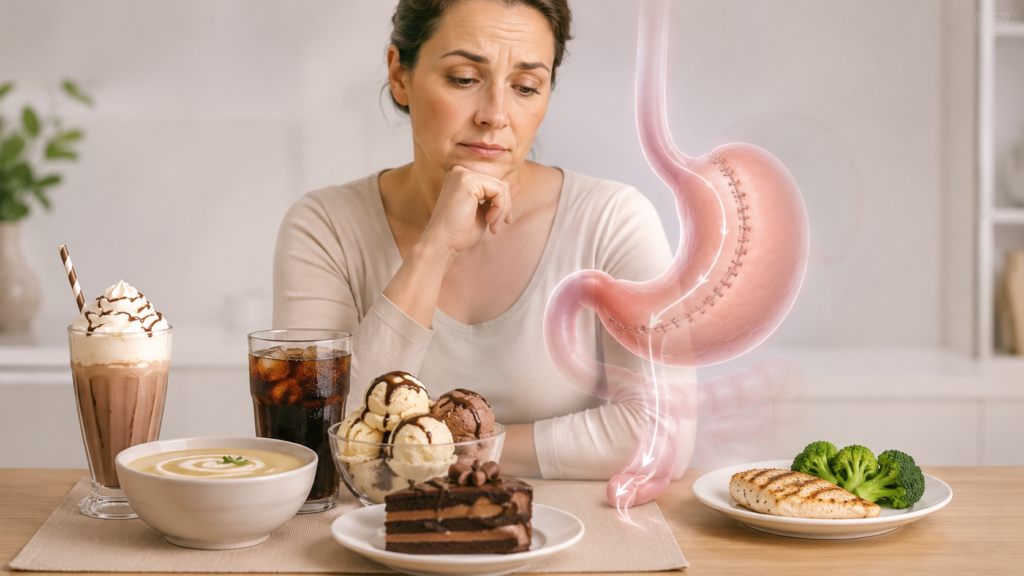
Some foods are easy to swallow and pass through the stomach quickly, but they can still be high in calories. Examples include sweet drinks, desserts, ice cream, creamy soups, milkshakes, and liquid or semi-liquid meals that are rich in sugar or fat.
These foods may not trigger fullness as strongly as solid, protein-rich meals. As a result, a person may take in more calories without realising it.
This is one of the most overlooked mistakes after ESG because the portion may look small, but the calorie intake can still be high.
Practical advice:
Focus on protein first. Include foods such as eggs, fish, chicken, tofu, Greek yogurt, or other suitable protein sources as advised. Choose meals that are nourishing and satisfying, rather than relying mainly on soft, sweet, or creamy foods.
Mistake 4: Skipping Follow-Up Appointments
ESG is a tool, not a one-time solution.
Follow-up is important because it helps the healthcare team monitor progress, identify small issues early, and adjust the plan when needed. This may include reviewing food intake, hydration, activity, weight progress, symptoms, and overall health.
Skipping follow-up is one of the mistakes after ESG that can make it harder to catch problems early. A small slip in habits may become a bigger issue if it is not addressed for months.
Follow-up also provides accountability and support. Many patients benefit from working with a team that may include a surgeon, dietitian, and other healthcare professionals.
Practical advice:
Attend scheduled reviews even when things seem fine. If weight loss slows, portions increase, or old habits return, it is better to seek advice early instead of waiting until weight regain becomes more significant.

When Should Patients Seek Review?
Patients should consider reviewing their plan if they notice:
Their portions are increasing again.
Their weight loss has slowed or plateaued.
They feel less full than before.
They are relying more on liquid calories or soft high-calorie foods.
They have missed follow-up appointments for some time.
These signs do not mean the procedure has failed. They simply mean the plan may need adjustment.
Early review is helpful because small changes are usually easier to correct than long-term weight regain.
Final Thoughts
ESG can be a valuable option for selected patients who need support with weight management. However, long-term success depends on what happens after the procedure.
The most common mistakes after ESG include going back to large portions too soon, eating until very full, relying on soft high-calorie foods, and skipping follow-up care. These habits can slowly affect results, but with the right support, they can often be corrected early.
Patients who feel their portions increasing again or notice their progress slowing should not feel discouraged. A simple follow-up with the healthcare team can help identify what is happening and guide the next step.
For anyone considering ESG or currently recovering after the procedure, it is important to consult a general and upper GI surgeon or bariatric surgeon for personalised advice and long-term follow-up.
